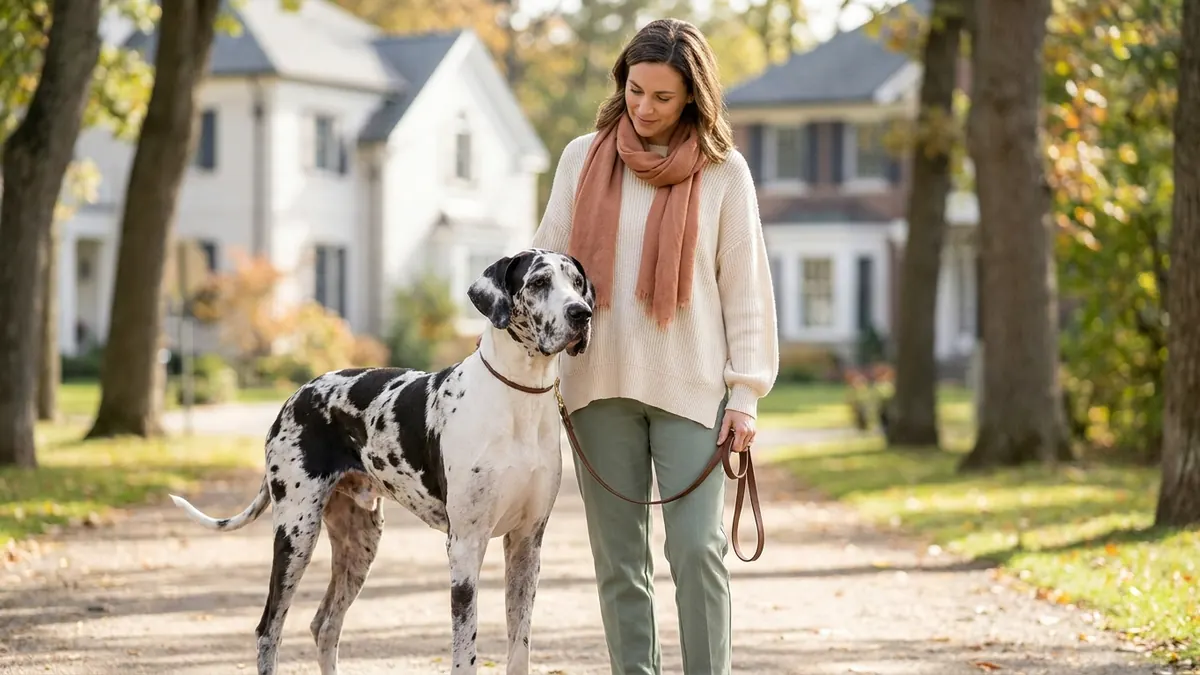
Great Dane
BREED REALITY SNAPSHOT

Great Dane reality check

Great Danes are often gentle in personality, but giant size makes the practical fit unusually demanding. This Breed Check focuses on space, transport, food, bedding, training, physical handling, health-cost planning, and whether the household can manage a very large dog safely.

Best for
  • Homes with enough space and confidence for giant-dog logistics
  • Owners who can budget for food, equipment, training, transport, and care
  • Households that can manage strength, visitors, stairs, and calm routines
Minimum needs
  • Large-dog training for leash manners, greetings, settling, and safe movement
  • Realistic budget for food, preventive care, emergency planning, and equipment
  • Space for bedding, transport, recovery, and daily low-impact movement
Watch out for
  • Giant size can turn small behavior problems into major handling issues
  • Bloat, joints, mobility, and lifespan questions need qualified guidance
  • Apartments or stairs may be difficult unless logistics are planned carefully
Lean decision pilot

What matters most before choosing this breed

A gentle giant profile still brings giant logistics, cost, space, and physical handling demands.

May fit you if

  • You have space, transport, bedding, and budget for giant-dog daily life.
  • You can train manners early so size does not turn small problems into big ones.
  • Your home can manage stairs, visitors, children, and emergency movement safely.

Size magnifies ordinary behavior

Great Dane fit should be evaluated through logistics first. Runtime size, handling, and cost fields make leash manners, greetings, stairs, car access, bedding, and veterinary handling central to ownership. A dog can be gentle and still be difficult if it pulls, blocks doorways, leans on children, or cannot be moved during illness. The page should ask whether the owner can teach calm behavior early, manage a giant body safely, and build routines that work when the dog is fully grown.
Cost and health planning are not optional

Scoring V2 budget and welfare dimensions make Great Dane ownership a high-planning decision. Food, equipment, transport, preventive care, emergency funds, and qualified guidance around bloat, joints, mobility, and recovery can affect whether the breed is practical. This page should not promise outcomes or discourage thoughtful homes. It should surface the real planning burden so users do not choose a giant breed because it seems calm while underestimating the cost and physical scale of care later. The logistics should be concrete.

Keep in mind

  • Bloat, joint, mobility, and lifespan questions should be discussed with qualified professionals.
  • Giant size affects transport, housing, emergency care, and safe handling every day.

Run the matcher to test whether giant-dog logistics fit your home.

Practical trait levels

Trait levels are practical guidance, not guarantees. Individual dogs vary.

Activity need2/5
LowerHigher
Mental stimulation2/5
SimpleDemanding
Handling difficulty4/5
EasierHarder
Owner experience required4/5
BeginnerExperienced
Grooming / shedding2/5
LowerHigher
Drool / mess4/5
LowerHigher
Barking / noise2/5
QuieterLouder
Climate sensitivity3/5
FlexibleSensitive
Care cost pressure5/5
LowerHigher
Responsible ownership. Breed fit is only one part of responsible dog ownership. A good match still needs time, training, vet care, supervision, and budget.

7-question reality check ยท no signup