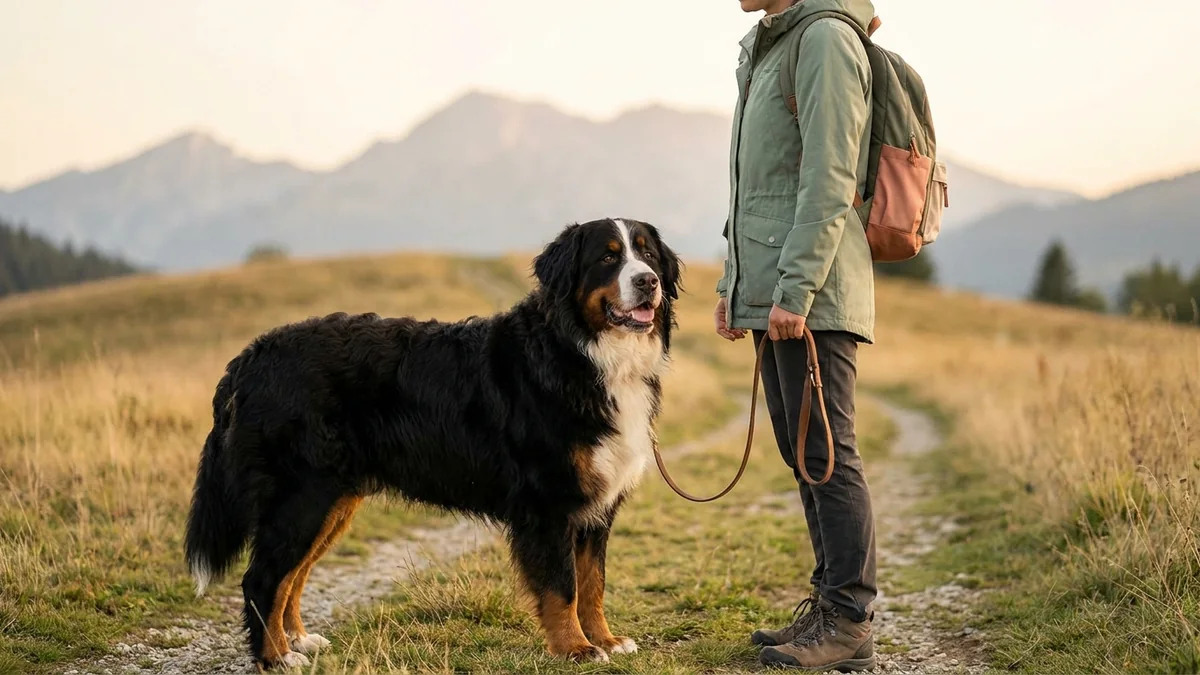
Bernese Mountain Dog
BREED REALITY SNAPSHOT

Bernese Mountain Dog reality check

Bernese Mountain Dogs can be gentle and striking, but giant size changes nearly every ownership decision. This Breed Check focuses on space, heat sensitivity, coat cleanup, physical handling, health-screening questions, emergency budget, and whether the household can support a large dog comfortably.

Best for
  • Homes with space, cool resting options, and realistic large-dog logistics
  • Owners ready for grooming, shedding, training, and physical management
  • Households with budget flexibility for preventive care and unexpected costs
Minimum needs
  • Room for safe movement, transport, bedding, grooming, and recovery
  • Daily moderate activity with heat-aware pacing and joint-conscious routines
  • Health-screening questions, insurance or savings planning, and training support
Watch out for
  • Large size can make routine care, travel, stairs, and emergencies harder
  • Warm climates require more planning than the calm temperament may imply
  • Health and lifespan realities should be discussed with qualified professionals
Lean decision pilot

What matters most before choosing this breed

Gentle appeal comes with giant size, shedding, heat sensitivity, cost, and health planning.

May fit you if

  • You have space, transport options, and budget for a very large dog.
  • You can manage shedding, grooming, stairs, visitors, and physical handling.
  • Your home can provide cool rest, moderate activity, and realistic care planning.

Large-dog cost is a core gate

Bernese Mountain Dog fit should start with logistics and budget, not only temperament. Runtime cost, size, grooming, and health-planning signals point toward higher food, equipment, transport, grooming, and veterinary exposure. A good match has space for large bedding, safe vehicle access, controlled stairs, and an emergency buffer before problems appear. This page should avoid making health predictions, but it should ask whether the owner can absorb a larger planning burden than many medium breeds require over time. Daily logistics should feel realistic before adoption.
Climate and body size shape daily life

Scoring V2 climate, handling, and activity dimensions make Bernese fit more than a yard-size question. Warm weather can limit exercise timing, while size affects bathing, travel, stairs, recovery, and emergency movement. The breed may suit steady homes that prefer moderate activity and can keep a cool indoor routine. It may be a poor practical match where heat, stairs, tight cars, or budget limits make ordinary care difficult. Planning should happen before the emotional appeal takes over fully. The fit should still work in summer.

Keep in mind

  • Cancer, joints, mobility, and lifespan questions should be discussed with qualified professionals.
  • Large size can make routine care and emergencies physically and financially harder.

Run the matcher to test size, climate, budget, and handling realities.

Practical trait levels

Trait levels are practical guidance, not guarantees. Individual dogs vary.

Activity need3/5
LowerHigher
Mental stimulation3/5
SimpleDemanding
Handling difficulty4/5
EasierHarder
Owner experience required3/5
BeginnerExperienced
Grooming / shedding5/5
LowerHigher
Drool / mess4/5
LowerHigher
Barking / noise2/5
QuieterLouder
Climate sensitivity4/5
FlexibleSensitive
Care cost pressure5/5
LowerHigher
Responsible ownership. Breed fit is only one part of responsible dog ownership. A good match still needs time, training, vet care, supervision, and budget.

7-question reality check ยท no signup