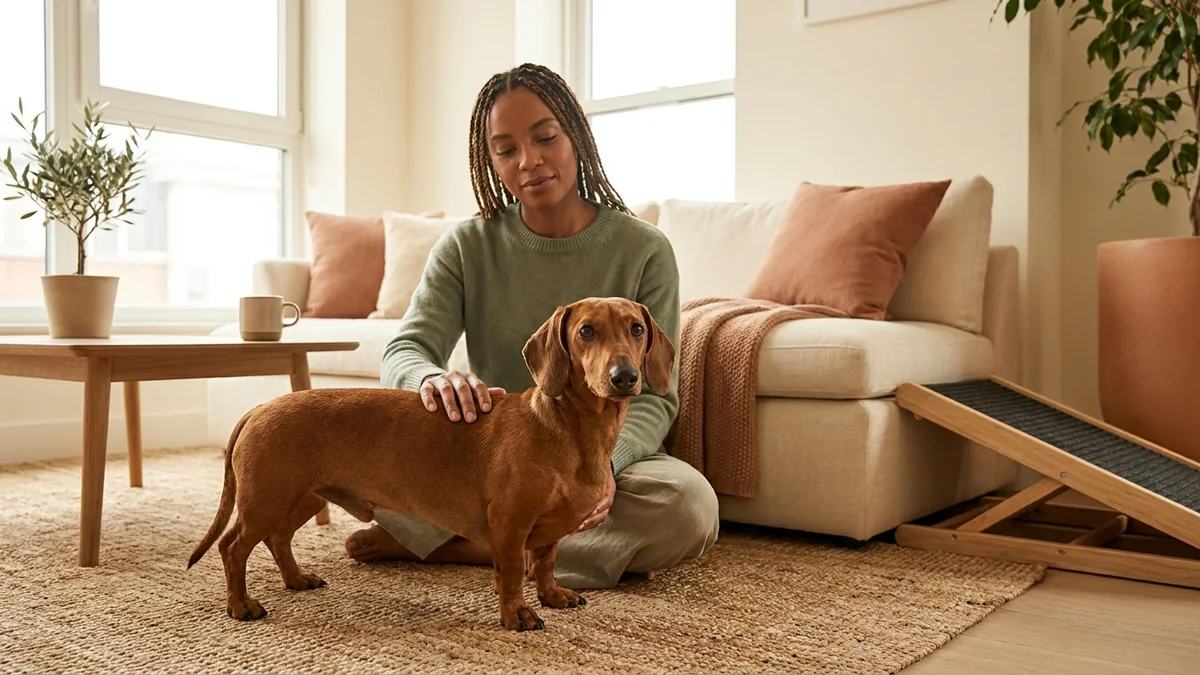
Dachshund
BREED REALITY SNAPSHOT

Dachshund reality check

Dachshunds are small, determined hounds, but back-aware routines, stairs, jumping, weight, barking, and prey drive need practical planning. This Breed Check focuses on health-safe ownership questions, child handling, home setup, scent-hound behavior, and realistic cost preparation.

Best for
  • Homes that can manage ramps, stairs, furniture, lifting, and weight carefully
  • Owners who enjoy scent-driven training and can supervise children or small pets
  • People prepared for barking, recall limits, dental care, and emergency planning
Minimum needs
  • Back-aware home routines plus qualified veterinary guidance when planning care
  • Leash discipline, door control, food management, and realistic recall expectations
  • Gentle handling rules for children, furniture, stairs, and larger dogs
Watch out for
  • Back and mobility concerns should be planned carefully without assuming outcomes
  • Exercise should be thoughtful rather than eliminated; individual dogs vary
  • Small size does not remove hound drive, barking, or training needs
Lean decision pilot

What matters most before choosing this breed

Small size does not remove the planning burden: back care, stairs, prey drive, and barking matter.

May fit you if

  • You can manage ramps, stairs, lifting technique, weight, and furniture access carefully.
  • You enjoy scent-driven training and can keep small pets, recall, and doors controlled.
  • Your household can supervise children and protect a long-backed small dog from rough handling.

Back-risk planning is part of welfare

Dachshund fit needs a health-safe frame before any unlock decision. Runtime cost and care fields flag intervertebral disc disease planning, weight control, jumping prevention, stairs, and emergency budgeting as practical ownership topics. This copy should not diagnose an individual dog or predict outcomes. It should ask whether the owner can make the home easier on a long-backed body, learn proper lifting, avoid rough play, and discuss screening, insurance, and warning signs with a qualified veterinarian or responsible breeder before committing.

Small does not mean simple

Scoring V2 handling, prey-drive, child-fit, and noise dimensions make Dachshund ownership more than an apartment-size question. A good fit can manage alert barking, food motivation, scent-led decisions, and cautious introductions to cats or small pets. Children need supervision because rough play can affect both behavior and body comfort. The breed may suit committed owners who enjoy training and management, but it should not be framed as an easy default for first homes that cannot control stairs, doors, snacks, or chase opportunities.

Keep in mind

  • Back, mobility, and pain concerns need qualified veterinary guidance; this page is not medical advice.
  • Exercise should be planned thoughtfully rather than avoided; individual dogs and coat varieties vary.

Run the matcher to test whether your home can support back-aware routines and hound instincts.

Practical trait levels

Trait levels are practical guidance, not guarantees. Individual dogs vary.

Activity need3/5
LowerHigher
Mental stimulation3/5
SimpleDemanding
Handling difficulty3/5
EasierHarder
Owner experience required3/5
BeginnerExperienced
Grooming / shedding2/5
LowerHigher
Drool / mess1/5
LowerHigher
Barking / noise4/5
QuieterLouder
Climate sensitivity2/5
FlexibleSensitive
Care cost pressure4/5
LowerHigher
Responsible ownership. Breed fit is only one part of responsible dog ownership. A good match still needs time, training, vet care, supervision, and budget.

7-question reality check ยท no signup