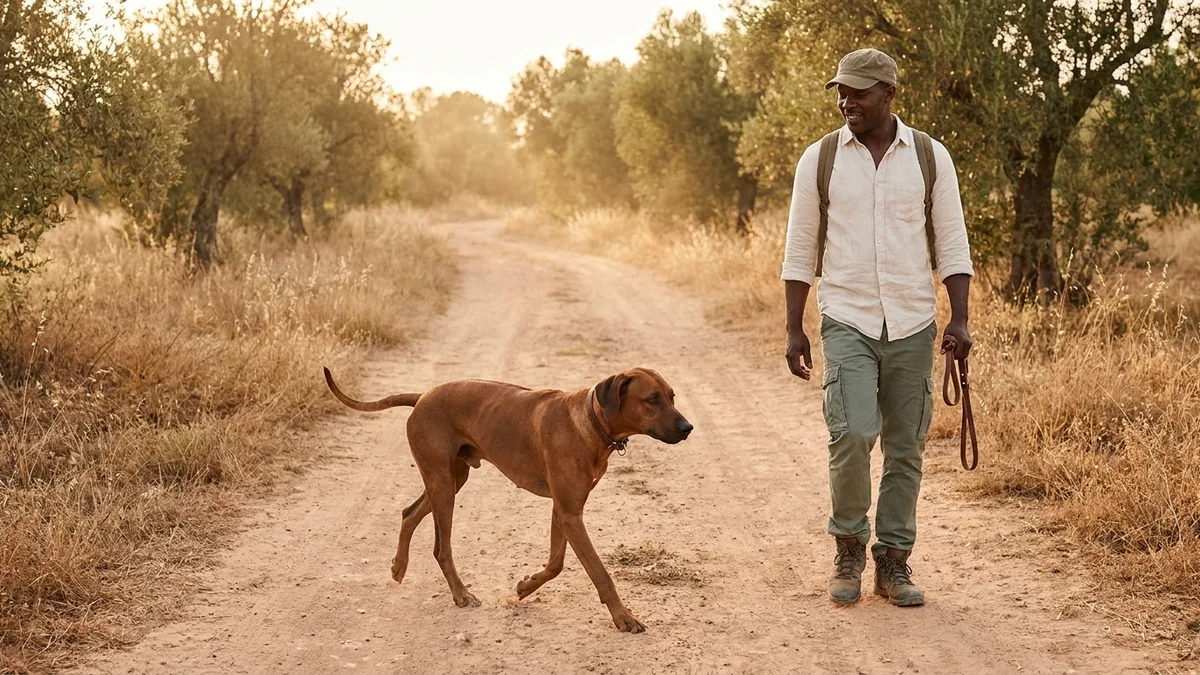
Rhodesian Ridgeback
BREED REALITY SNAPSHOT

Rhodesian Ridgeback reality check

Rhodesian Ridgebacks are athletic, independent hounds that need capable, consistent owners. This Breed Check focuses on real exercise demands, an independent and strong-willed temperament, early training, and the confident handling a large, powerful dog requires day to day.

Best for

  • Active homes that can meet the exercise needs of a strong athletic hound
  • Owners with experience or commitment to steady, consistent training
  • Households that can offer structure, space, and confident handling

Minimum needs

  • Daily vigorous exercise plus outlets for a fit, energetic hound
  • Early socialization and reward-based training for an independent thinker
  • A home able to manage size, strength, and a self-assured temperament

Watch out for

  • Independence can read as stubbornness without consistent, patient training
  • Strength and prey drive call for reliable leash and recall management
  • This is a demanding large breed, not a low-effort first dog for most homes

Saved on this device — no account needed.

Breed decision guide

What matters most before choosing this breed

Athletic hound independence needs exercise, leash control, training, and capable handling.

May fit you if

  • You can provide vigorous exercise, secure routines, and patient training.
  • You are ready to manage strength, prey drive, visitors, and public manners.
  • Your household wants an independent hound, not an always-eager obedience dog.

Independence needs skilled consistency

Rhodesian Ridgeback fit should be measured through athletic hound management, not only short coat or elegance. Activity, prey-drive, size, handling, and owner-experience signals point toward vigorous exercise, leash manners, recall realism, early socialization, and calm visitor routines. A good match respects independence and can train without harshness or inconsistency. The mismatch appears when a household expects automatic compliance from a powerful dog or lacks secure routines around wildlife, public spaces, doors, and adolescent strength during ordinary weeks together before committing.

Exercise must be paired with control

Owner-fit factors around activity tolerance, children, pets, budget, and training make Ridgeback recommendations conservative. Long walks, running outlets, and mental work help, but the owner also needs leash discipline, supervised interactions, and realistic small-pet management. A stronger home can handle a self-assured large dog through ordinary weeks, not only outdoor adventures. This guidance avoids framing the breed as simply low-grooming because strength, prey drive, independence, and health-cost planning can shape the real ownership decision over time significantly before committing in practice.

Keep in mind

  • Strength, prey drive, recall limits, and visitor routines need training and secure management.
  • Hip, elbow, thyroid, dermoid sinus, bloat, and cardiac questions should be discussed with qualified professionals.
Run the matcher to compare exercise, independence, prey drive, and handling confidence.

Practical trait levels

Trait levels are practical guidance, not guarantees. Individual dogs vary.

Activity need4/5
LowerHigher
Mental stimulation3/5
SimpleDemanding
Handling difficulty4/5
EasierHarder
Owner experience required4/5
BeginnerExperienced
Grooming / shedding3/5
LowerHigher
Drool / mess2/5
LowerHigher
Barking / noise2/5
QuieterLouder
Climate sensitivity4/5
FlexibleSensitive
Care cost pressure3/5
LowerHigher
Keep comparing

Compare similar breeds and lower-friction alternatives before deciding.

Quick 7-question breed check

Get a first look at whether this breed may fit your home, routine, and expectations.

Instant results · no signup

Full 17-question matcher

Get a more complete recommendation across breeds.

Instant results · no signup

Cookie preferences

PerfectDogMatch uses essential cookies to keep the site working. Optional analytics cookies only load if you accept them.

Cookie Policy