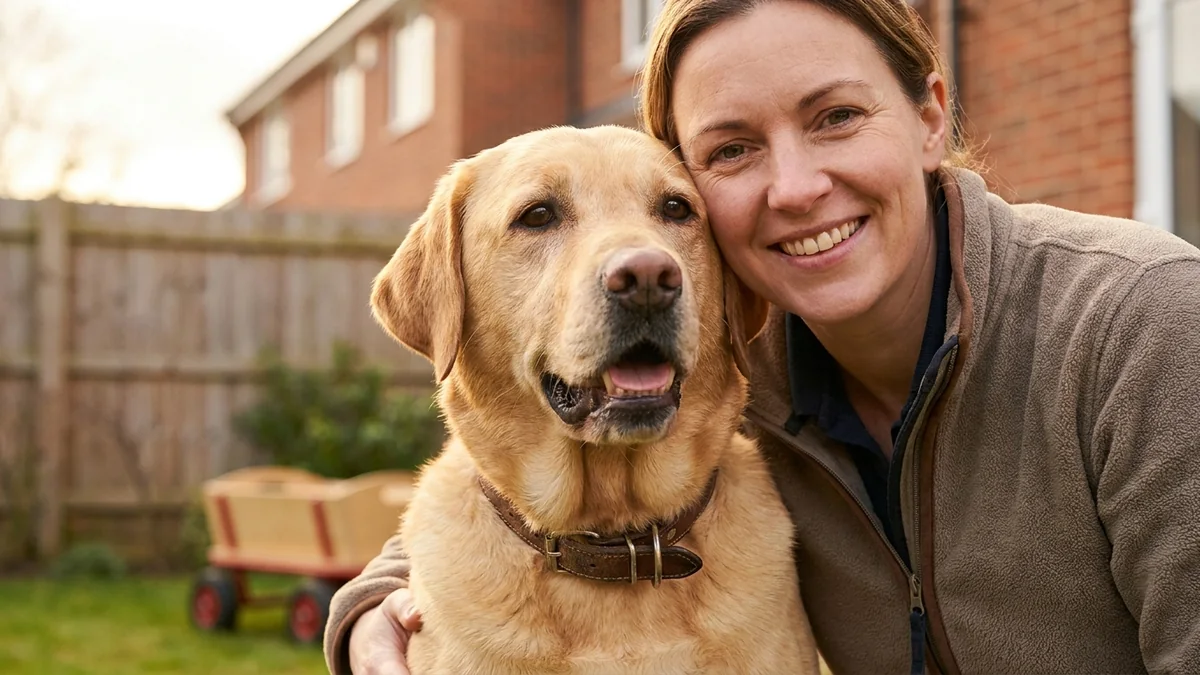
Labrador Retriever
BREED REALITY SNAPSHOT

Labrador Retriever reality check

Labrador Retrievers are often easy to like, but their daily needs are not automatic. This Breed Check looks at exercise, food motivation, training consistency, shedding, and family routines so the decision is based on practical ownership rather than popularity alone.

Best for
  • Homes that can provide active daily walks, play, and training games
  • Owners who enjoy steady companionship and can manage a social, food-motivated dog
  • Families that can supervise children and keep greetings, play, and meals structured
Minimum needs
  • Daily exercise and mental work that match a large, energetic retriever
  • Food management, basic manners, and safe storage for tempting items
  • Routine coat care, nail care, dental care, and space for wet or muddy days
Watch out for
  • Young Labs can be bouncy and mouthy without consistent training
  • Food drive can create management issues if meals, treats, and counters are not controlled
  • Large size, shedding, and activity needs can be more demanding than the friendly image suggests
Lean decision pilot

What matters most before choosing this breed

The friendly reputation is real, but activity, food management, and size need daily structure.

May fit you if

  • You can provide active daily exercise plus training, not only weekend outings.
  • You are ready to manage food motivation, jumping, greetings, and household rules.
  • You want a social retriever and have room for shedding, mud, and large-dog logistics.

Activity is the baseline, not a bonus

A Labrador Retriever page should not rely on popularity as proof of fit. Runtime activity and mental-stimulation fields make the real decision more concrete: the owner needs regular walks, play, training games, and enough structure to prevent a young or bored Lab from becoming difficult indoors. The breed can be forgiving in many homes, but lean v1 should still ask whether the owner can repeat the routine on ordinary weekdays. If exercise and training are irregular, a friendly temperament does not remove the mismatch.

Family fit still depends on supervision and manners

The Labrador pilot can mention family routines, but it must avoid implying automatic child safety. The useful decision point is whether the household can supervise play, teach calm greetings, manage food and toys, and prevent a large excited dog from overwhelming smaller children or guests. Scoring V2 family and training dimensions support this framing: the breed may be a strong option when the home can provide structure. Without that structure, size, mouthiness, enthusiasm, and food drive can become the main tradeoff.

Keep in mind

  • Food drive and size can create management issues if meals, counters, and greetings are not structured.
  • Individual dogs vary; family routines still need supervision, training, and calm handling.

Use the matcher to check whether a Lab fits your weekday routine, not just your ideal weekend.

Practical trait levels

Trait levels are practical guidance, not guarantees. Individual dogs vary.

Activity need4/5
LowerHigher
Mental stimulation3/5
SimpleDemanding
Handling difficulty3/5
EasierHarder
Owner experience required2/5
BeginnerExperienced
Grooming / shedding3/5
LowerHigher
Drool / mess3/5
LowerHigher
Barking / noise2/5
QuieterLouder
Climate sensitivity2/5
FlexibleSensitive
Care cost pressure3/5
LowerHigher
Responsible ownership. Breed fit is only one part of responsible dog ownership. A good match still needs time, training, vet care, supervision, and budget.

7-question reality check ยท no signup